Pathfinder Helps VELUX Electrify Long-Haul.
Long-haul electrification in road freight is often discussed as a future ambition. But in a recent collaboration between VELUX and LOTS Group, Pathfinder helped turn that ambition into reality: a 1,250 km round-trip route, making it one of Europe’s longest battery-electric vehicle (BEV) freight corridors in operation.
Viktoria Kindesjö
Sustainability & Customer Success Manager
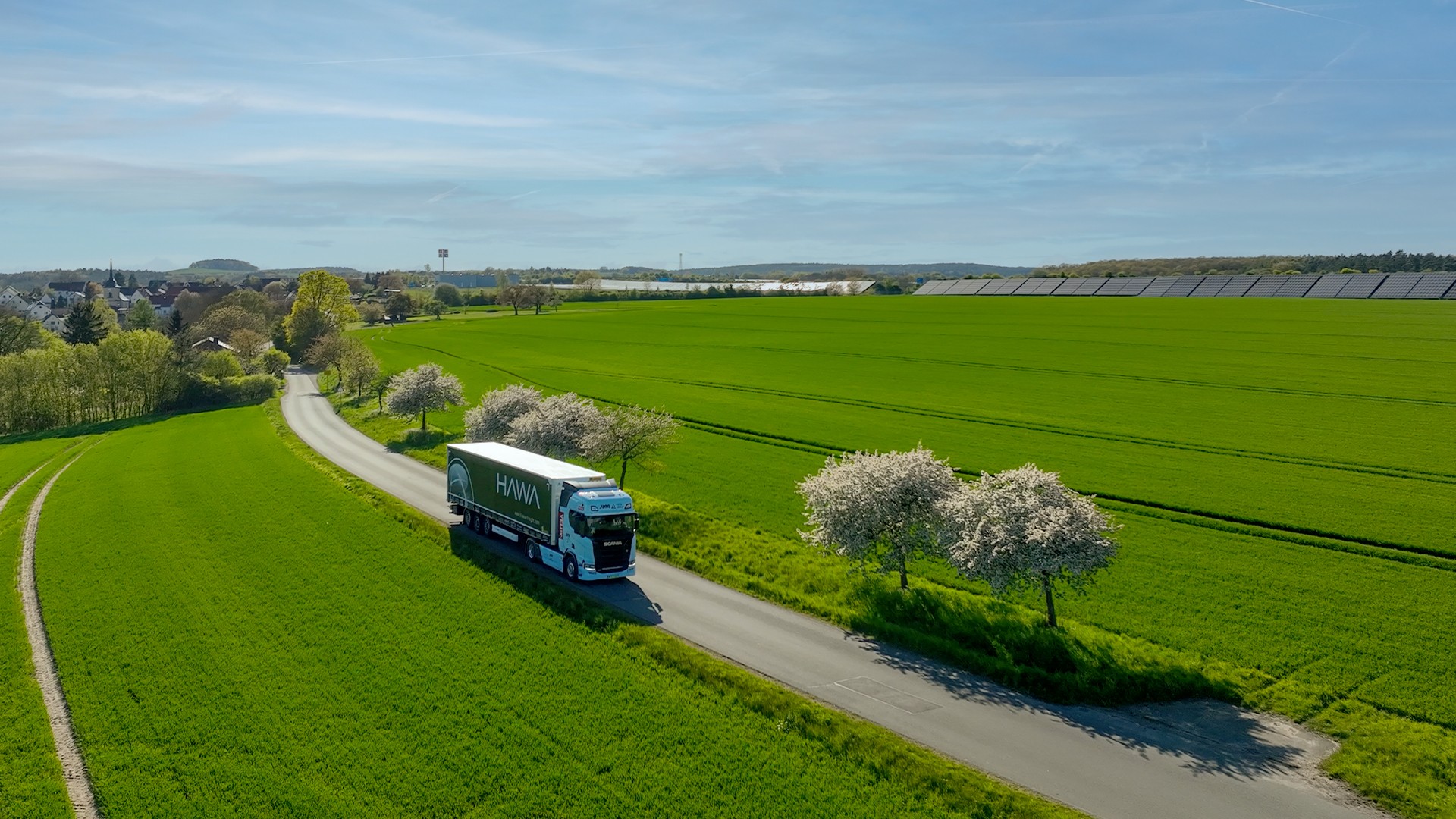
Using Pathfinder, LOTS Group were able to analyze the corridor in detail by combining shipment data, route characteristics, charging infrastructure intelligence, and operational constraints into one planning environment. This made it possible to assess how electrification could work in practice.
Transitioning a complex corridor to electric
In long-haul electrification, the difficulty is rarely a single variable. It is the interaction between many variables at once:
route distance
timing requirements
payload characteristics
charging availability
charging power
stop structure
and electricity costs
Pathfinder enabled LOTS Group to evaluate these factors through scenario modelling and corridor-level analysis. This reduced uncertainty in four important ways:
it clarified which routes were operationally suitable for BEV deployment
it helped identify the charging logic required to make the corridor work in practice
it helped assess the cost implications in comparison to diesel alternatives
it created a more grounded basis for planning future rollout
Why this matters
A 1,250 km round trip is not a small electrification pilot. It is the kind of route that tests whether battery-electric freight can move beyond short-haul use cases and become part of mainstream European logistics operations.
By enabling detailed analysis of one of Europe’s longest BEV corridors, Pathfinder supported exactly the kind of planning work needed to move from ambition to execution.
For VELUX, this meant better understanding how electrification could support both sustainability goals and operational performance. For LOTS Group, it meant being able to combine execution-oriented logistics expertise with a planning platform capable of turning data into concrete deployment scenarios.
“For us, the transition to lower-emission transport must be both ambitious and practical. By combining LOTS Group’s planning capabilities with insights from our own transport flows, we can assess how electric trucks can be integrated into our network while maintaining the reliability, flexibility and efficiency our business requires.”, says Nadia Møllebjerg, Senior Program Manager, Logistics Sustainability at VELUX.
From ambition to implementation
Long-haul electrification does not depend on vehicle technology alone. It depends on planning quality.
Electrifying a corridor at this scale requires the ability to:
structure and interpret transport data
evaluate route feasibility
understand charging conditions
and compare operational scenarios with enough detail to support real decisions
That is the role Pathfinder was built to play.
As more shippers, carriers, and logistics partners look to electrify complex transport flows, projects like this show that the transition is no longer about setting targets, it’s about execution and having the tools to plan implementation properly.
And that is where Pathfinder creates value: helping logistics teams understand not only whether electrification is possible, but how to make it work.